Demonstration site · built by Akrodos · akrodos.com
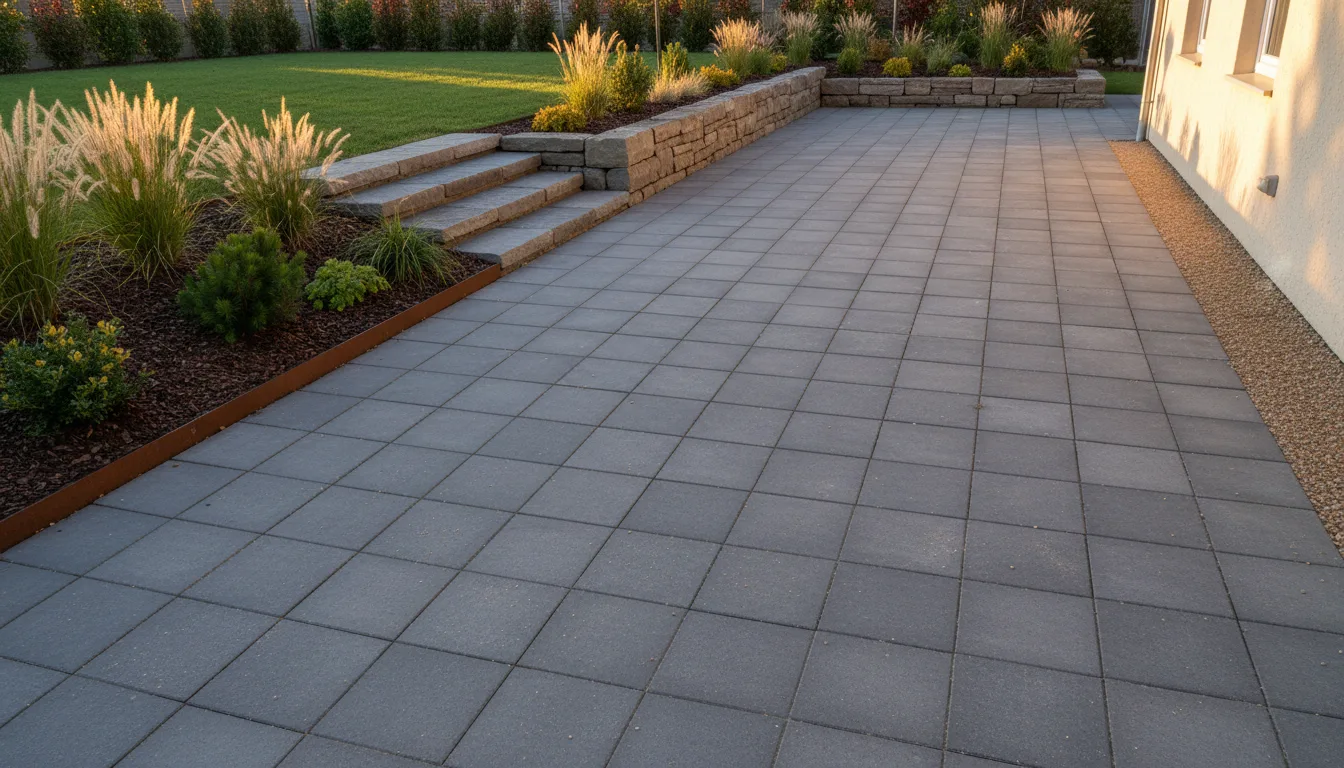
Patios almost never fail because of the paving. They fail because of what is underneath it, and what is underneath it is the half of the job that gets cut when a quote has to come down. Below is the build-up we work to, and the calendar we work around.
6in
Compacted base
Crushed stone under a patio, laid and compacted in lifts rather than dumped in one go. A drive wants more.
1in
Bedding sand
Sharp sand, screeded flat and deliberately not compacted before the pavers go on. Compacting it first is how you get ruts.
12in
Gravel behind a wall
Clean angular stone and a perforated pipe. A retaining wall holds soil easily and water very badly.
Half of this trade is knowing which month it is.
Pick a month
The dot marks the current month. Timings are for a temperate northern climate.
July
Right now
- Can be built
- Prime hardscape. Paving, walls and drives.
- Can be planted
- The worst month of the year to plant anything. Wait six weeks.
- Book now for
- September and October planting slots are being taken now.
None of this is a sales deadline. It is the calendar, and it is the same one every contractor in the area is working to, which is exactly why the good months go first.
Four things to walk on
Pick the surface for the traffic, not for the photograph.
All four sit on the same base. What changes is how they age, how fast they lay, and what they ask of you in year ten.
Concrete paver
30 years or more
Consistent thickness, so it lays fast and lies flat. Individual units lift and go back if a service ever has to come up.
On most units the colour is a surface pigment, and thirty years of sun takes it somewhere paler than the sample board.
Clay paver
50 years or more
The colour is the clay itself, so it does not fade. It weathers rather than wears out.
Costs more, and the units vary enough that laying takes longer and cutting waste runs higher.
Natural stone
Indefinite
Nothing else looks like it, and it is the one surface that improves with age rather than tolerating it.
Variable thickness means every slab is bedded individually, which is slow. Some stone is porous enough to want sealing.
Loose gravel
5 to 10 years
Cheapest by a wide margin, drains freely, and it is the honest answer for a side return or a bin store.
It migrates. Expect to rake it, top it up, and keep it out of the lawn, and do not put it anywhere a wheelbarrow runs.
Four stages, one garden.
Plates 01 to 04
Example imagery, not photographs of completed jobs. A live site would carry the owner’s own pictures of their own work here.
Questions people ask
Because the base is what holds the paving flat. A patio is roughly six inches of compacted crushed stone with an inch of sharp sand screeded over it, and all of that is dug out, carted away, brought in and compacted before a single paver is touched. Patios that sink were rarely laid badly. They were bedded on soil.
Almost never. It raises the finished level, which usually puts it above the damp course, and it buries whatever was making the old one fail. If the old base is genuinely sound and the levels work then it can be done, and that is a decision for a site visit rather than a phone call.
An eighth of an inch per foot at the absolute minimum, running away from the building. Dead level looks tidy on the day and then holds a puddle for the next twenty years, and in a hard freeze that puddle is what lifts the joints.
Water. A wall holds back soil easily and water very badly, so a foot of clean angular gravel and a perforated pipe at the base give the water a route out. Walls that bulge or lean are usually holding back saturated soil rather than too much of it.
April, or September. Turf laid in either month roots itself with the weather doing the watering. Turf laid in July is a daily watering commitment for six weeks, and it is the most common reason a new lawn dies.
It depends entirely on where the water goes now, which is why it gets looked at in the rain where possible. Any hard surface stops water soaking in where it used to, and that water then arrives somewhere else. Sometimes the answer is that the existing route is fine.
Book a site visit
Tell us where the water goes.
Roughly what size, what is there now, and whether anything puddles after heavy rain. That last one changes more quotes than the size does.
Placeholder number. Nothing on this site connects to a real line.