Demonstration site · built by Akrodos · akrodos.com
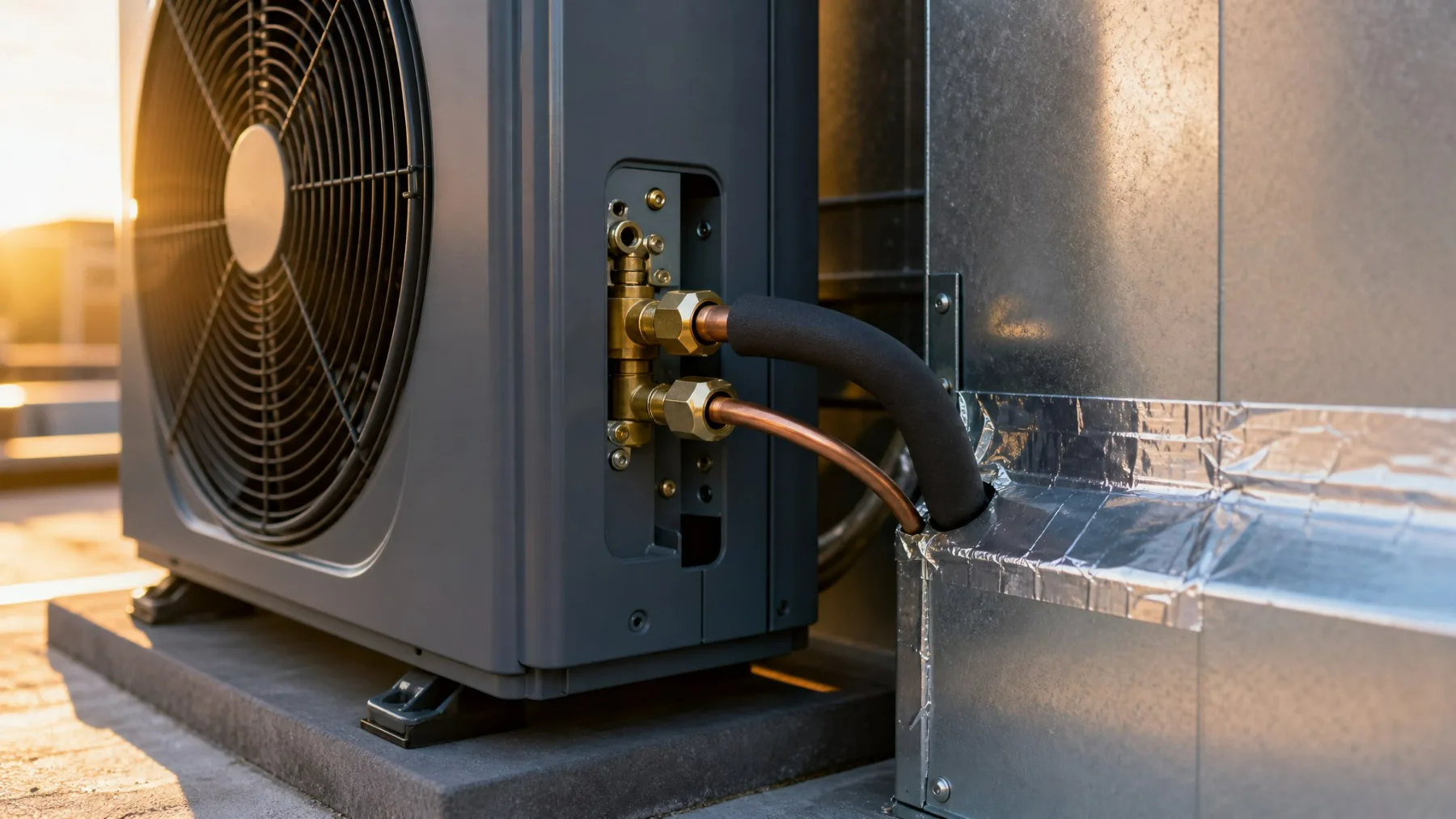
A new outdoor condenser and its line set, brass service valves and insulated suction line meeting the sheet metal, in low evening light

Heating / Cooling / Ductwork

The split tells you everything.

(555) 555-0103

Return air in, supply air out. The difference across the evaporator coil is the fastest honest read on whether a system is healthy, and it takes four minutes. We measure it before we quote anything.

400CFM

Airflow per ton of cooling. The first number checked on a sizing complaint.

0.5IN WC

Total external static pressure most residential duct systems are designed around.

8-13MERV

Filter range a typical residential blower can pull through without starving.

±3°F

Room to room variance a properly balanced system should hold.

What the work actually is

Four services

01

Air conditioning repair

Warm air at the vents is usually low charge, a fouled evaporator coil, or a failed run capacitor. We read the split and the static pressure before anyone touches refrigerant, because two of those three are not a refrigerant problem.

02

Furnace repair

No heat. We test the igniter, the flame sensor, and the high limit in that order, then tell you which one failed.

03

System installation

Sizing comes from a load calculation, not from the tonnage of the box being replaced.

04

Duct sealing

A leaking return pulls attic air into the house, which is why the filter loads up fast and the far bedroom never catches up. We seal the plenum and the branch joints, then re-balance so the runs at the end of the trunk get their share.
What the work looks like

Plates 01 to 04

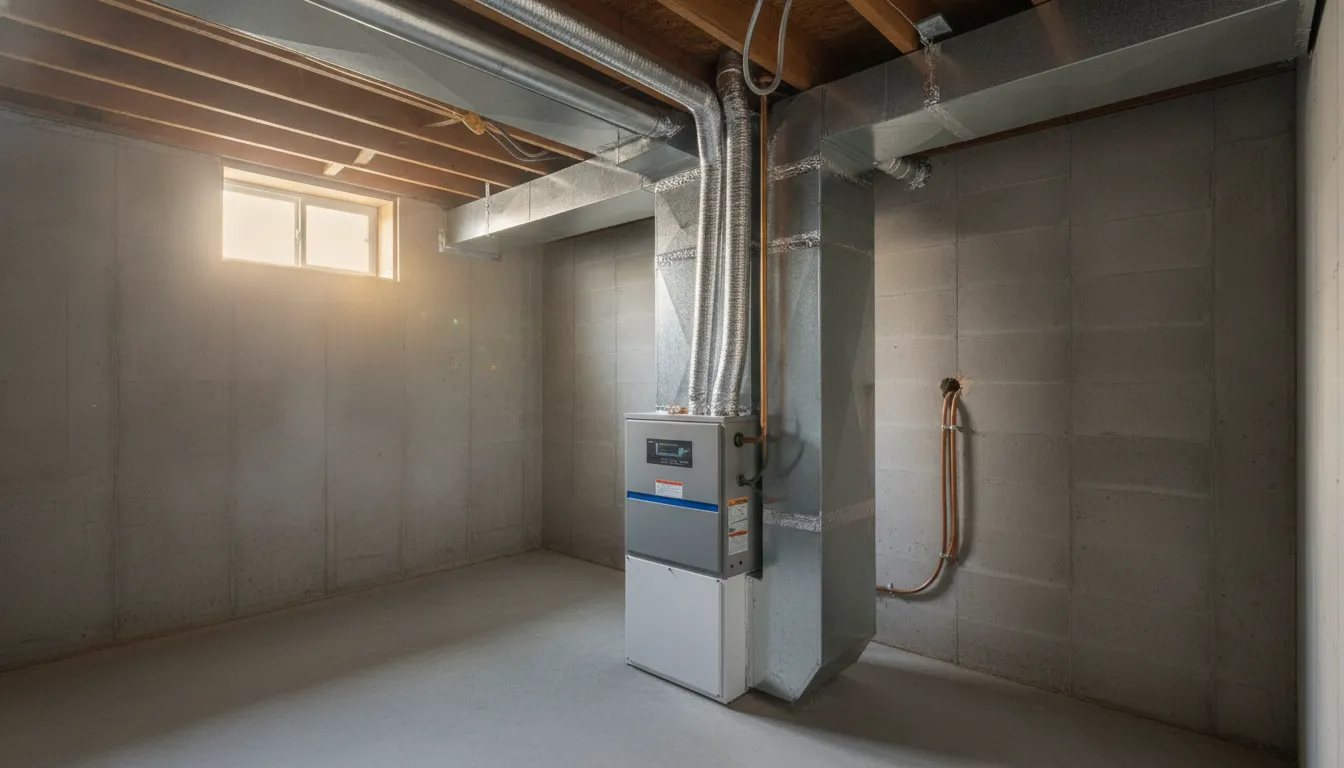
A gas furnace and evaporator coil in an unfinished basement with sheet metal plenum and flexible duct branches overhead
01Furnace and coil in a basement mechanical room, supply plenum tied in above.
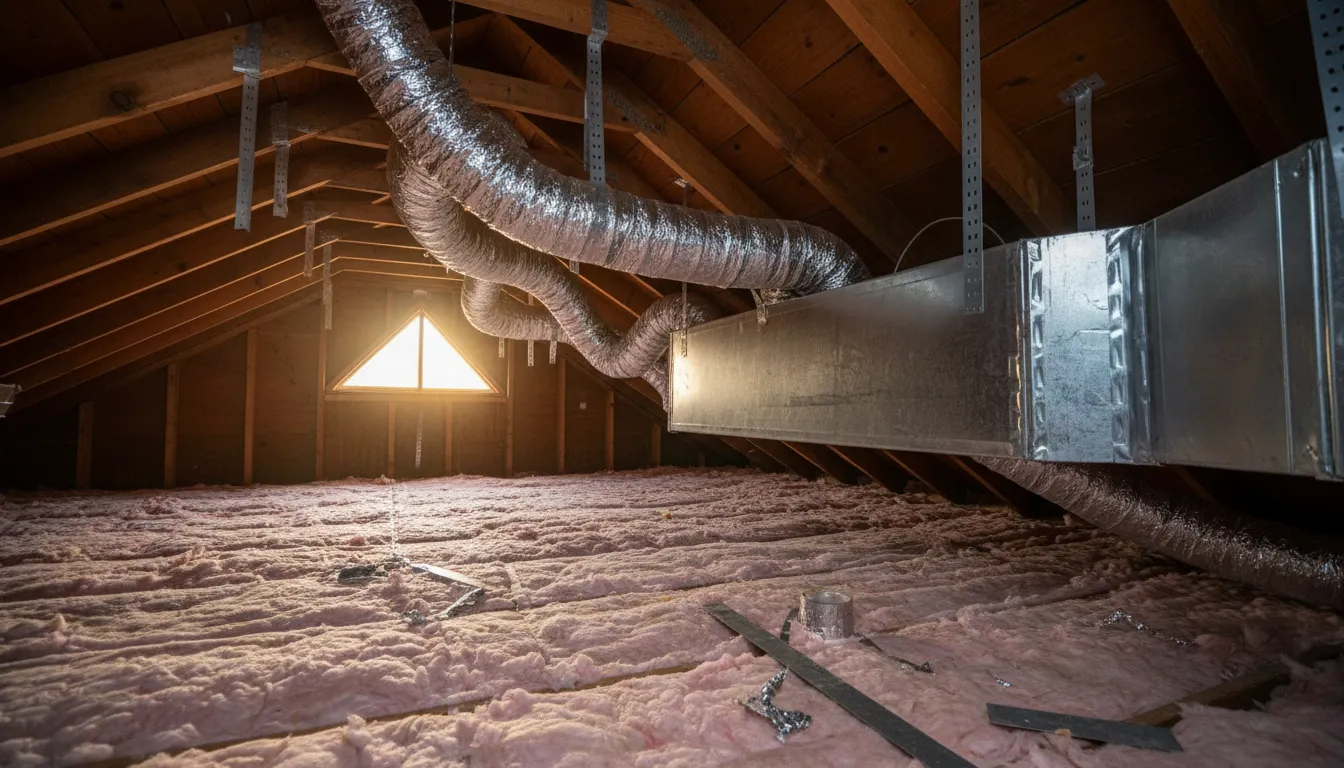
Insulated flexible duct and a rigid sheet metal trunk line running across attic joists above batt insulation
02Trunk line and insulated branch runs in an attic, joints sealed and strapped.
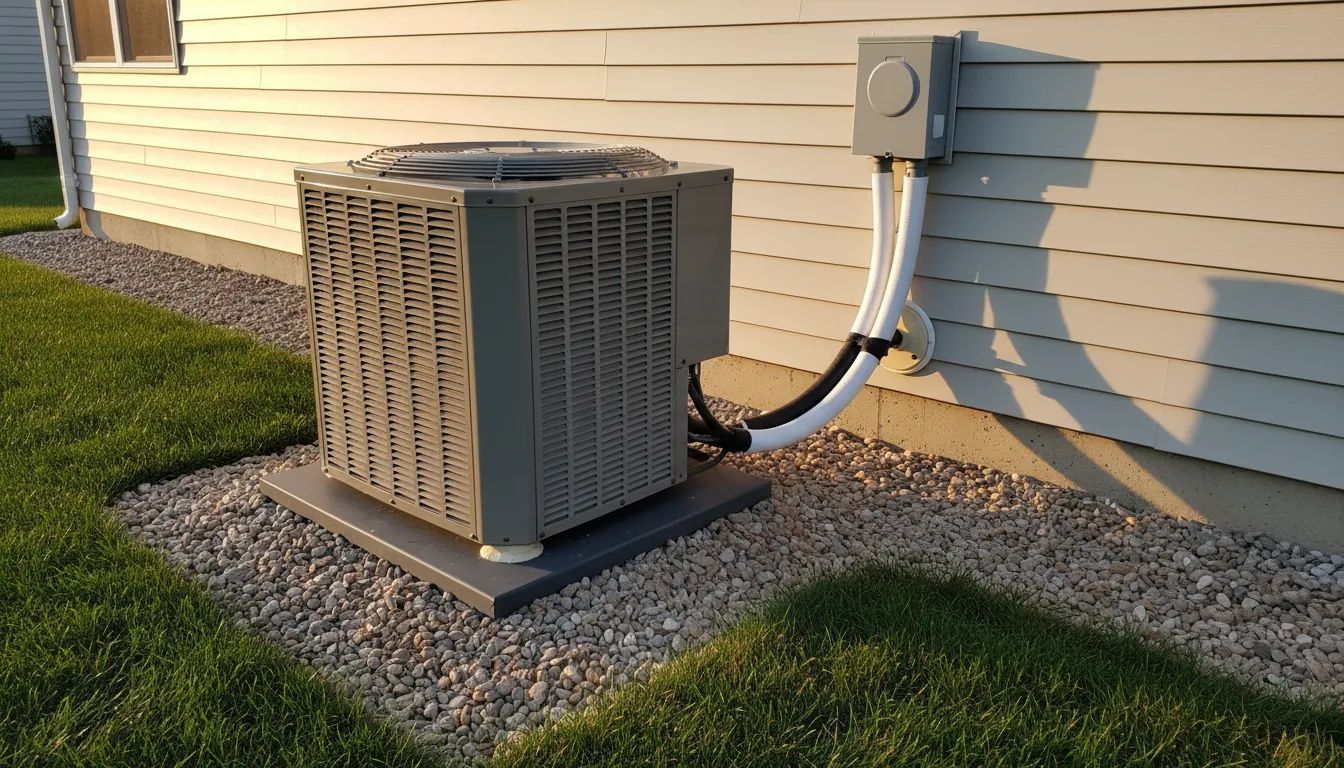
An outdoor condenser unit on a composite pad beside a house with an electrical disconnect box and insulated line set
03Condenser level on its pad, disconnect above, line set sealed at the wall.
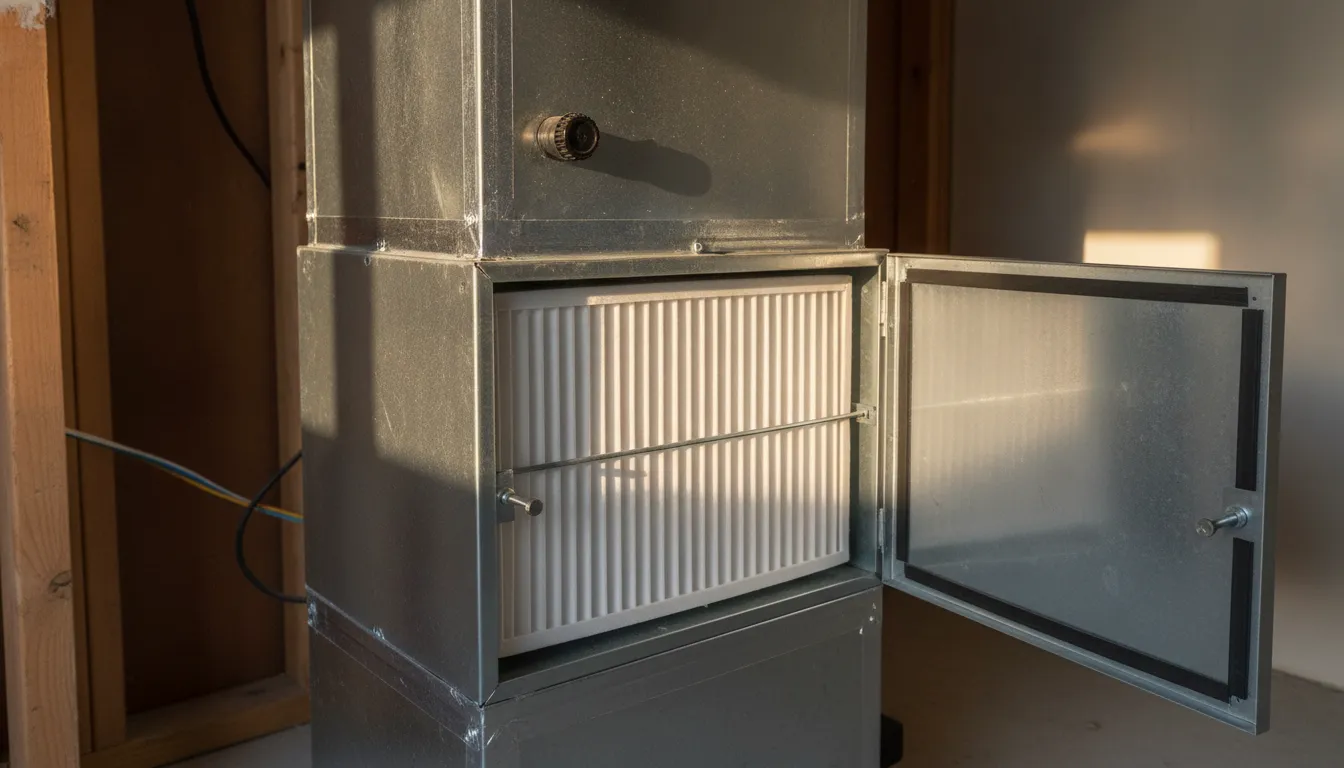
An open filter cabinet on a residential air handler showing a new pleated media filter seated in its rack
04Media filter cabinet with the access door open, manometer port in the plenum.

Example imagery, not photographs of completed jobs. A live site would carry the owner’s own pictures of their own work here.

What happens after you call

Four steps

  1. 01

    You call or send the form

    Tell us what the system is doing. We book an arrival window rather than a whole day.

  2. 02

    We measure before we guess

    Temperature split, static pressure, and charge. The readings decide the diagnosis, not the age of the unit.

  3. 03

    You get the price in writing

    What failed, what it costs, and what happens if it waits. You approve before anything is replaced.

  4. 04

    The work, then the numbers again

    Floors covered, work done, and the same readings taken again so you can see what changed.

Figure 01

What sealing changes

Air takes the cheapest path available to it. A joint that has opened up is a cheaper path than the bedroom at the end of the trunk, so that bedroom loses every time. These are drawings, not photographs.

BeforeLeaking

Open joint upstream. The runs past it never see full airflow.

AfterSealed

Joint sealed. Every run on the trunk gets its share.

Questions people ask

03 entries

Often not. A unit that short cycles or blows warm can be a capacitor, a contactor, or a clogged coil. We measure first and replace what actually failed.

A straight swap of a furnace and coil is usually one day. Reworking ductwork adds a day or more, and you will know which one you are looking at before the work starts.

Usually airflow rather than equipment. Undersized returns, crushed flex duct, and dampers left where the last person put them all show up as one room that never catches up.

Book a diagnostic

Tell us what it is doing.

Warm air, no heat, a loud start, one room that never catches up. The more specific you are, the shorter the visit is.

Or call

(555) 555-0103

Placeholder number. Nothing on this site connects to a real line.

Call