01
Roof replacement
Tear off to the deck, replace anything soft, then underlayment, flashing, and field. Going over an existing layer hides the decking, which is the part that actually fails.

Shingles get the blame and the attention. In practice most leaks start where the roof meets something else: a chimney, a valley, a pipe boot, a wall. That is where we look first, and it is where a roof is worth paying for.
Published figures
| Material | Service life | Wind rating | Min pitch | Notes |
|---|---|---|---|---|
| 3 tab asphalt | 15 to 20 yr | 60 mph | 4:12 | The budget option. Flat profile, lightest of the asphalt products. |
| Architectural asphalt | 25 to 30 yr | 110 mph | 4:12 | Laminated and heavier. What most replacements use now. |
| Standing seam metal | 40 to 60 yr | 140 mph | 3:12 | Concealed fasteners. Costs more up front and outlives two asphalt roofs. |
| Synthetic slate | 40 to 50 yr | 110 mph | 4:12 | The look of slate at a fraction of the dead load on the framing. |
Figures are published manufacturer and code ranges for each material, not a claim about any particular job. Local code and the specific product decide the real numbers.
Tear off to the deck, replace anything soft, then underlayment, flashing, and field. Going over an existing layer hides the decking, which is the part that actually fails.
Most leaks are flashing rather than field shingle. Chimneys, valleys, and pipe boots account for the large majority of the calls that come in.
Hail bruises the mat without breaking the surface, so damage is often invisible from the ground and still takes years off the roof.
A roof that drains badly rots fascia and soffit from behind. Sizing and the number of downspouts matter more than the gutter itself.
Plates 01 to 04
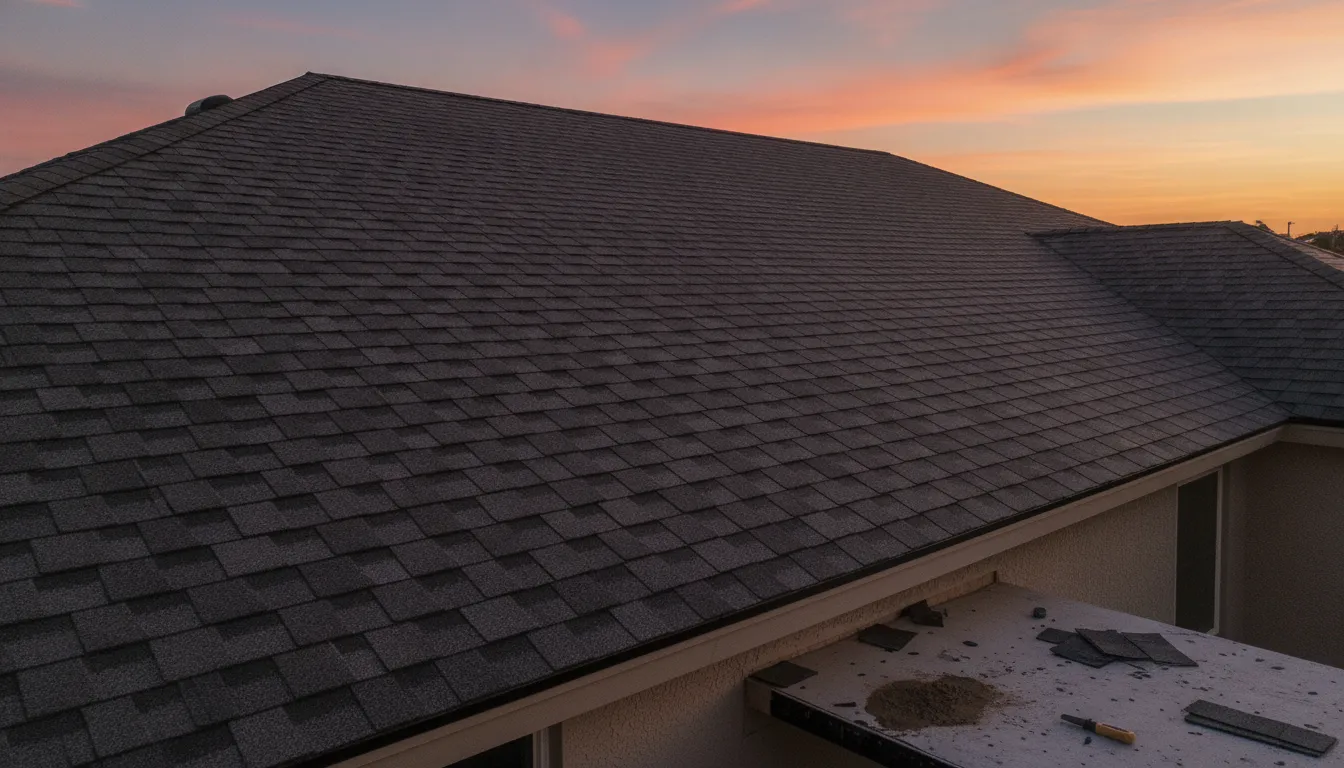
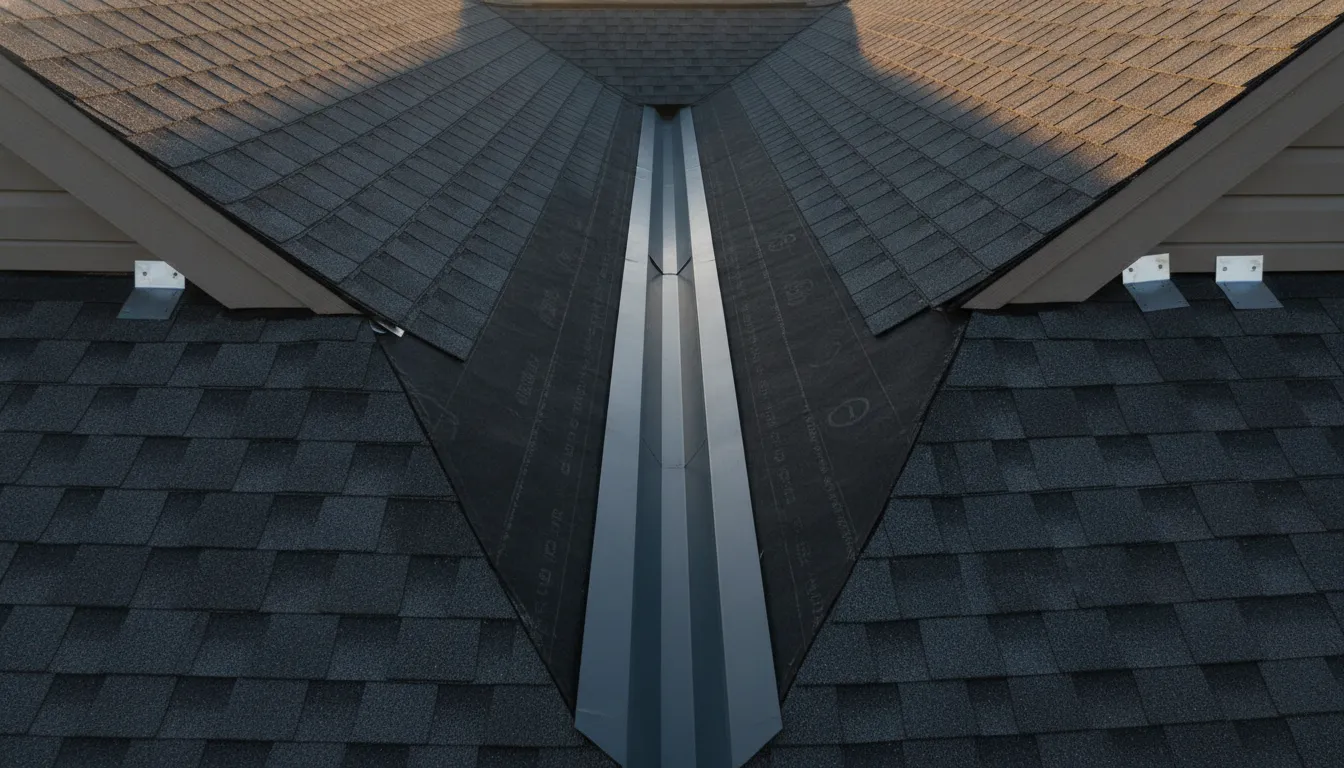
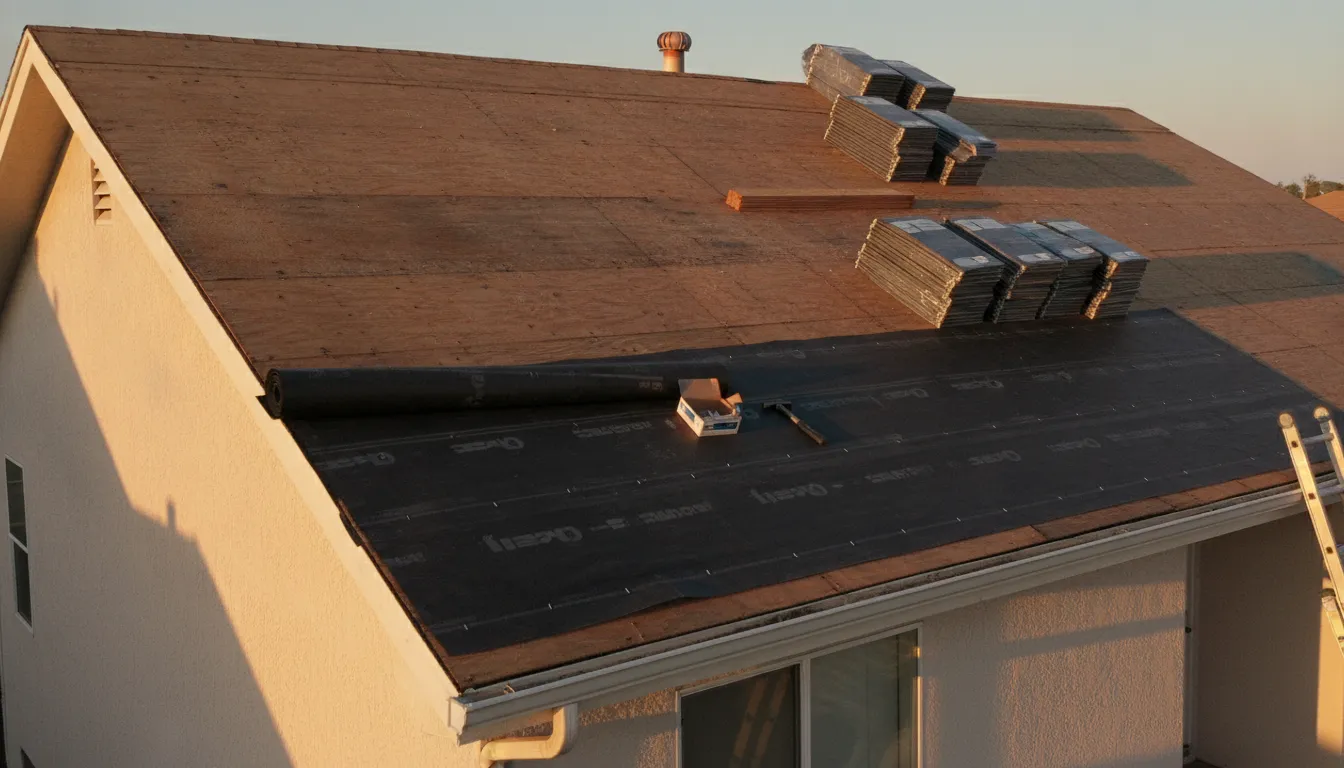
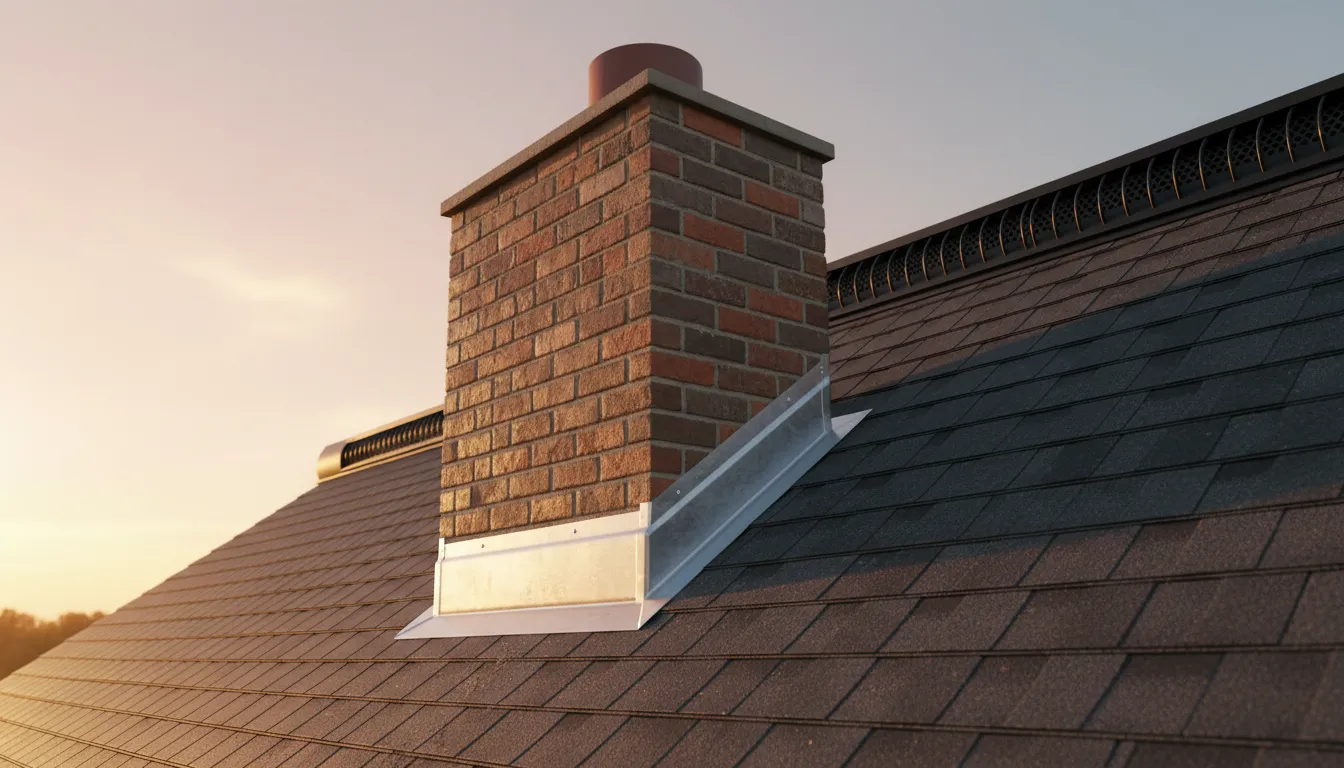
Example imagery, not photographs of completed jobs. A live site would carry the owner’s own pictures of their own work here.
Code allows a second layer in many places, but it hides the decking underneath. Soft or delaminated sheathing is exactly what a tear off is meant to find, and covering it does not make it stop.
Usually you cannot see it from the ground. Hail bruises the mat under the granules, so the surface looks intact while the shingle has lost years of life. It shows up as granules in the gutter first.
A typical single family roof is one to three days depending on pitch, how many layers come off, and how much decking has to be replaced once it is open.
Get an inspection
A stain on a ceiling, granules in the gutter, a missing shingle after wind, or an adjuster asking for a second opinion.